
About Alan Braxe
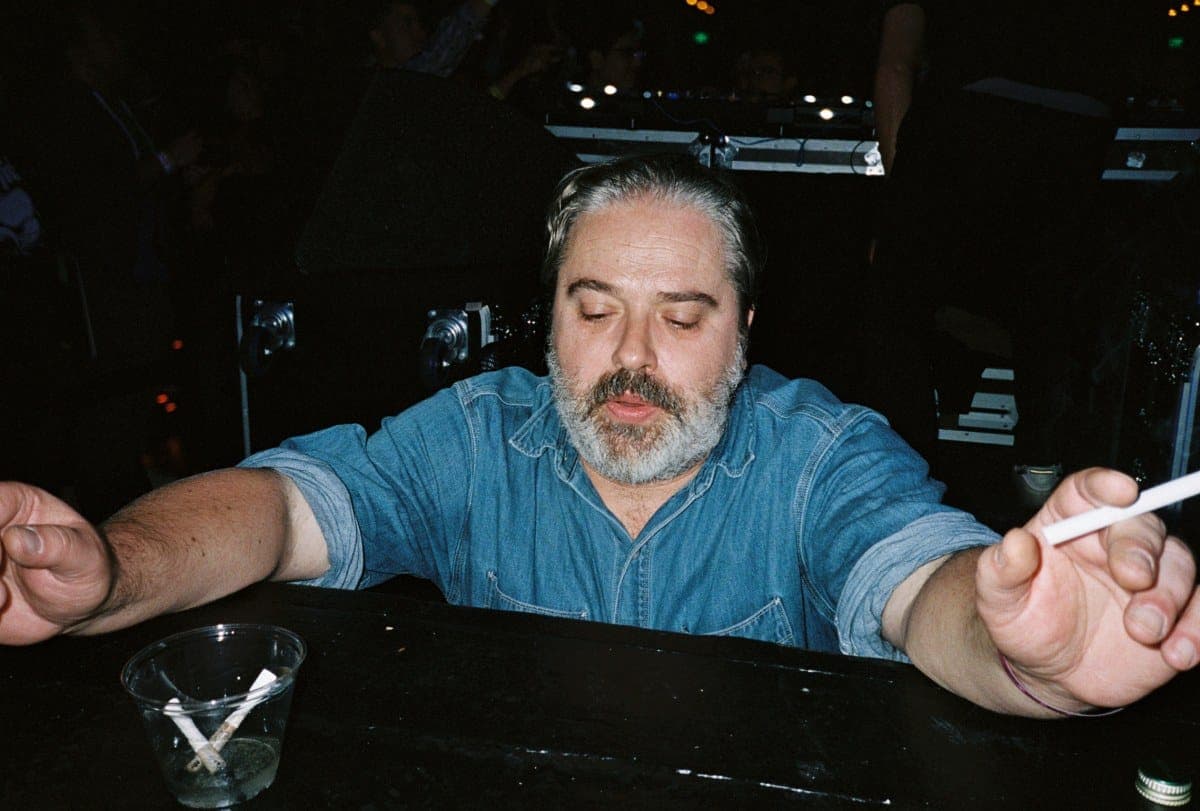
Alan Braxe, who was born Alain Quême, could have had an easy well-charted life, following the path of a well-brought-up boy from the Paris suburbs, destined for a conventional future. Instead, he chose a side road, guided by a deep and unmistakable love of music. Alain grew up in the 1980s, and among the artists he loved were funk and disco musicians, but also UK punk, which his older brother introduced him to—particularly bands like Wire and Heaven 17. At the time, loving both worlds was almost antithetical, even impossible. Not for him. He absorbed everything, and in those mixtures he found his taste, his desire. After graduating from high school, Alain enrolled at university, but he also discovered something else: night life, parties, raves. His first year as a student was therefore lived at night, and it resembled one long rave colored by techno and house music coming from Detroit and Chicago. That year-long night unfolded in now-legendary clubs like the Boy, where he met people—young people like himself—who became his friends. Among them were two other kids forming their own group, a duo called Daft Punk. Alain knew he wanted to make music too; he could feel it, and it was there that he became his most studious, most meticulous self. He got started with very little: a mixing desk, an E-mu SP-1200 sampler recommended by Thomas Bangalter, one half of Daft Punk, and a compressor. Alain worked, produced, composed. Thomas offered to release an EP on his label, Roulé. The track was called Vertigo, and it gave the young Alain exactly that feeling—a dizzying thrill he still recalls with emotion: “Releasing a record on Roulé was my wildest dream.” In the wake of Vertigo, two young men, Jess and Crab, who were running a night at the Rex Club, invited Alan Braxe to perform live. He asked two friends for help: Benjamin Diamond came to sing, and Thomas Bangalter was there too, with a machine. A trio took shape, searching for ideas for the show, and stumbled upon a record by Chaka Khan, from which they lifted a loop. On stage, live at the Rex, it gave birth to a track that would become Music Sounds Better with You. An undeniable title, an interplanetary hit. Riding that success, Alan took another turn, one that allowed him to fully build his own freedom. He founded his own label, Vulture. “I had in mind a Detroit label I loved: Underground Resistance. For those two words—underground and resistance. Staying independent, resisting, fighting to release the things you truly love.” With this label, he also carried forward the idea of making music with someone else—with another friend. With Fred Falke, a friend he had met during military service, they gathered around a few machines and a bass guitar. The same shock as with Stardust and Music Sounds Better with You: starting from a sample, they built a first track, Intro, which became the label’s first release in 2000 —and another hit that sold tens of thousands of copies. At the beginning of the 2000s, much of the world seemed to be dancing to Intro after having already danced to Music Sounds Better with You. Two hits, two anthology tracks, back to back. Several records followed: Palladium / Penthouse Serenade, Rubicon, Love Lost. But also In Love With You, with singer Romuald, under the name The Paradise. EPs rather than an album, even if most of these tracks would later be brought together—thanks to the idea and drive of his cousin Delphine Quême, who was then managing the label—under the title The Upper Cuts, a compilation that has become legendary over the years. First released in 2005 and reissued almost twenty years later, in 2023, it confirmed what time had already proven. Despite the passing years, Alan Braxe has never really released a proper studio album: his chosen format remains the single track, as if in fidelity to Underground Resistance and his beginnings in techno. His other favored format is the remix. Since the beginning, he has produced them constantly for an extraordinarily wide range of artists, from Britney Spears to Test Icicles, Björk to Beyoncé, Goldfrapp, Röyksopp, Kelis, Charlotte Gainsbourg, Hot Chip, Ford & Lopatin, Cerrone... Little by little, he also began performing as a DJ from 2006 onward—an exercise initially against his nature, yet one that suited him all the same, and one that carried him through the 2010s. It also allowed him to preserve his freedom as a producer, to keep releasing records at his own pace, and to attempt more experimental sounds, as on The Ascent, a four-track record in a more contemplative vein, produced with a single instrument: a Buchla synthesizer. Alan Braxe belongs to that rare category of solitary, fiercely independent artists who cherish their independence, yet do not entirely love their solitude, preferring to experience it with others. His very free career has therefore been marked by collaborations, and one of the longest-running dates back to the early 2010s, when he decided to make music with his cousin, one DJ Falcon, another celebrity of the French Touch circuit. An album has long been planned, but true to the spirit of the early days, they have so far released only EPs, including the celestial Step by Step (2022), sung by Panda Bear, as well as a deeply mysterious EP under the name UFO (2025)—in fact a collaboration with their longtime comrades, the musicians of Phoenix. “UFO was a demo we sent to Phoenix. They sent back a vocal, and rather naively we thought it would make for a lovely collaboration—that it would make sense for it to become a group, a project, even if we don’t know whether there will be more. It was decided in a café, just like that, in a super romantic and poetic way.” The record, like all of Alan Braxe’s releases over the past few years, came out on Smuggler’s Way, a label created with the American branch of Domino Recording Company, where all of Alan Braxe’s records now reside. This collaboration came about because Alan Braxe reached out directly to Laurence Bell, the historic head of Domino, proposing a partnership. Bell then introduced him to Peter Bernard, who manages the label’s US branch. It was with him that the reissue of The Upper Cuts came to life, and that the duo Braxe + Falcon truly settled into place. All of this happened patiently, in the manner of a rebirth—or at the very least a new chapter—in the life of a man who has always functioned through others, while jealously preserving his solitude and his independence, as if to better master his emotions and desires. His tracks all tell that story: Vertigo, Intro, Paradise, Step by Step, Voices, even the remixes for Britney Spears—all speak to that characteristic blend in Alan Braxe’s music, oscillating between ecstasy and resilience, melancholy and hope, suffering and absolute joy. After all, it is precisely from these cracks and hollows, these slowdowns and surges, that the most haunting music is invented—first and foremost for oneself.